
Expert Timing Guidance for Protecting Your East Texas Asphalt Investment
You’ve just invested in a beautiful new asphalt driveway, and it looks fantastic. The surface is smooth, the deep black color is rich and uniform, and you’re eager to protect this investment for years to come. One of the most common questions we hear at DC Paving & Sealcoating is: “When should I apply that first protective sealcoat?” The answer might surprise you, patience is actually your best friend when it comes to new asphalt. Our deep understanding of both asphalt science and local climate challenges has taught us that proper timing isn’t just important, it’s critical to your driveway’s long-term performance. From intense summer heat that regularly pushes temperatures past 100°F to high humidity and occasional winter freezes, East Texas conditions demand that we get the timing exactly right. We’re committed to helping you protect your investment with expert guidance based on proven industry standards and real-world experience in our regional climate.
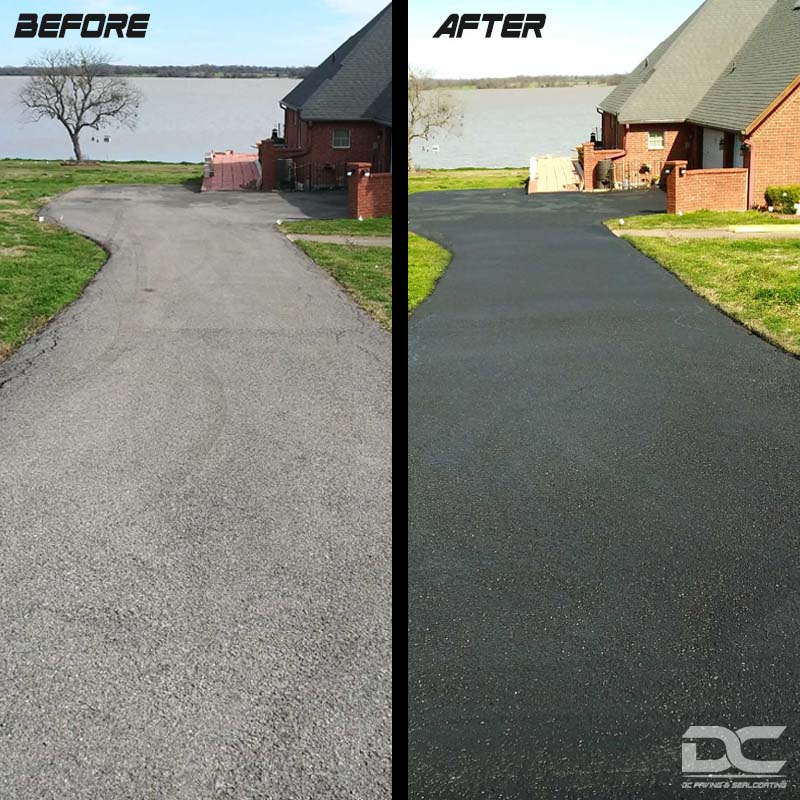
Why Timing Matters for New Asphalt Sealcoating
When fresh asphalt is first laid, it contains petroleum-based oils that give it flexibility and help bind the aggregate materials together. These oils need time to evaporate and allow the asphalt to properly cure and harden. This curing process is essential for creating a stable, durable surface that can withstand daily use and environmental stress.
If you apply sealcoat too soon, you risk trapping these oils beneath the protective layer. This prevents proper hardening and can result in a surface that remains soft, spongy, and susceptible to damage. You might notice tire marks, depressions from parked vehicles, or even imprints from the sealcoating equipment itself. The asphalt may also become more prone to cracking, chipping, and premature wear because it never developed the structural integrity it needs.
On the other hand, waiting too long to apply that first sealcoat leaves your new asphalt exposed to harsh elements. UV radiation from intense summer sun accelerates oxidation, causing the asphalt to dry out and become brittle. Water infiltration during heavy rain events can work its way into the surface, and temperature fluctuations cause expansion and contraction that leads to cracking. The sweet spot for timing protects your investment without compromising the curing process.
The Ideal Timeline: 90 Days to 6 Months
Industry experts and experienced contractors agree that new asphalt driveways should be sealcoated between 90 days and 6 months after installation. At DC Paving & Sealcoating, we typically recommend waiting a minimum of 90 days, with the ideal window being around 3 to 6 months for most properties.
This timeframe allows sufficient curing while still providing timely protection against environmental damage. During this waiting period, your asphalt will transition from a shiny, black appearance to a matte finish, a visual indicator that the oils have properly evaporated and the surface has hardened adequately.
Several factors can influence exactly where your driveway falls within this timeline. Hot, humid climates actually accelerate the curing process compared to cooler regions. Summer temperatures often exceed 100°F, which helps drive off those petroleum oils more quickly. However, if your driveway was installed during cooler months (late fall or winter), you may need to wait closer to the 6-month mark to ensure complete curing.
The thickness of your asphalt also plays a role. Standard residential driveways typically have 2 to 3 inches of asphalt, while commercial applications may be thicker. Thicker installations require additional curing time. Your driveway’s exposure to direct sunlight matters too. Surfaces in full sun cure faster than those in shaded areas.
How to Tell When Your Asphalt Is Ready for Sealcoating
Beyond simply counting days on the calendar, there are visual and physical indicators that tell you when your new asphalt is ready for its first sealcoat. The most obvious sign is the color change. Fresh asphalt has a deep, glossy black appearance. As it cures, this transitions to a duller, matte black or slightly grayish tone. When you no longer see that initial sheen, it’s a good indication that the oils have evaporated.
The surface texture also changes during curing. Run your hand across the asphalt during cooler temperatures. Fully cured asphalt feels firm and dry, while uncured asphalt may still feel slightly tacky or soft, especially on hot days. If the surface still gives noticeably under pressure or you can easily make an impression with your shoe, it needs more time.
Temperature is another consideration. The best time to apply sealcoat is when temperatures are consistently between 50°F and 90°F, with at least 48 hours of dry weather forecasted. This typically means late spring through early fall, avoiding the peak heat of summer and any potential winter freezes.
Climate Considerations and Professional Application
The combination of intense heat, high humidity, and UV exposure creates an environment that’s particularly demanding on asphalt surfaces. During summer months, temperatures regularly exceed 100°F, and the asphalt surface itself can become even hotter. This extreme heat can soften uncured asphalt, but it also accelerates the curing process for new installations.
Moisture is a constant concern. Water is asphalt’s enemy, working its way into small cracks and causing deterioration from beneath the surface. During freeze-thaw cycles in winter, this trapped water expands and contracts, creating larger cracks and potholes. Proper sealcoating creates a moisture barrier that protects against this damage.
While timing is critical, the quality of application is equally important. Professional sealcoating involves thorough surface cleaning to remove dirt, debris, and oil stains, filling cracks and repairing minor damage, applying commercial-grade sealant specifically formulated for regional climate conditions, and ensuring proper coverage and thickness for maximum protection.
After sealcoating, your driveway needs 24 to 48 hours to cure before foot traffic and 48 to 72 hours before vehicle traffic, depending on conditions. Once applied, sealcoating should be refreshed every 2 to 3 years for residential driveways. Regular maintenance provides ongoing protection against UV damage, water infiltration, and normal wear, while maintaining your driveway’s attractive appearance.
Ready to protect your new asphalt driveway with perfectly timed sealcoating? Contact DC Paving & Sealcoating today for your free consultation. Our team will assess your driveway’s condition, confirm it’s ready for sealing, and schedule service at the optimal time. Don’t leave your investment vulnerable, let us help you extend your driveway’s life and maintain its beautiful appearance for decades to come!