
Early Asphalt Crack Repair: Preventing Expensive Damage Before It Starts
You notice a hairline crack in your East Texas parking lot and think, “It’s just a small fissure. I’ll handle it next month.” But by next month, that innocent crack has expanded. By next winter, it’s widened further as water freezes and thaws inside it. By the following spring, what started as a minor issue has transformed into an expensive pothole, buckled pavement, or complete section failure requiring thousands of dollars in repairs. At DC Paving & Sealcoating, we’ve witnessed this progression countless times throughout Tyler, Longview, Marshall, and East Texas. After over 20 years in the asphalt paving business, we’ve learned one fundamental truth: crack filling isn’t a luxury—it’s the most cost-effective insurance policy your parking lot can have. The difference between a business that invests in early crack repair and one that delays is often the difference between a couple hundred dollars in preventive maintenance and ten thousand dollars in emergency replacement. This guide explains why addressing cracks immediately is so critical, how professional crack filling works, and how DC Paving’s proven approach protects your investment while keeping repair costs predictable and manageable.
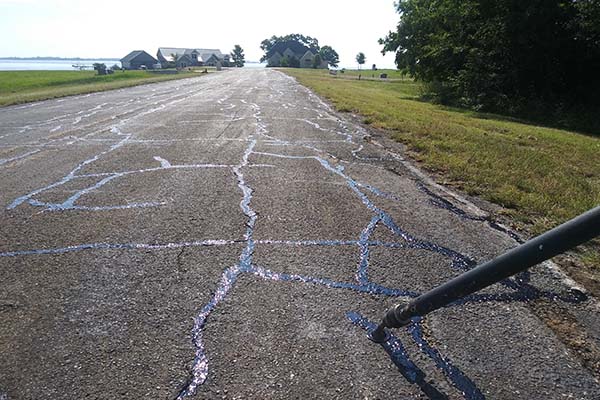
1. Small Cracks Turn Into Expensive Potholes Without Professional Repair
Water is asphalt’s greatest enemy. When water seeps into small cracks, it doesn’t just sit on the surface—it penetrates the asphalt layers and reaches the base material underneath. During East Texas winters, when temperatures fluctuate between freezes and thaws, this water expands by approximately 9% when frozen. This expansion creates enormous pressure within the crack, forcing it wider and deeper with each freeze-thaw cycle.
The progression is almost predictable: A hairline crack grows into a 1-inch fissure. That fissure becomes a 3-inch gap. Eventually, chunks of asphalt break away, creating a pothole. Research confirms the urgency: 75% of unsealed cracks turn into potholes within three years, while only 1% of sealed cracks follow the same path. This means filling cracks early is 75 times more effective than waiting. Once potholes form, the repair costs increase dramatically—not just for filling the hole, but for repairing the compromised base layer beneath. What could have been prevented with a $200 crack-filling service becomes a $2,000-$5,000 pothole repair or section replacement.
2. The Damaging Freeze-Thaw Cycle East Texas Parking Lots Face
East Texas experiences seasonal temperature swings that are particularly hard on asphalt. Summer temperatures regularly exceed 100°F, causing asphalt to expand. Winter occasionally dips below freezing, causing rapid contraction. These temperature swings create stress in the pavement, making existing cracks expand and new ones form.
Water trapped inside cracks amplifies this problem exponentially. When temperatures drop, that water freezes and expands, forcing the crack wider. When temperatures warm, the ice melts, but the damage has already occurred. The cycle repeats, getting worse with each season. This is why spring thaw reveals the most extensive crack damage—months of freeze-thaw expansion have taken their toll. Professional crack filling with hot-pour rubberized sealant is specifically designed to flex with these temperature changes, preventing water infiltration during the entire cycle.
3. DC Paving’s Professional Approach to Crack Filling Prevents Future Problems
Not all crack repairs are created equal. DIY crack filling with consumer-grade products often fails within months because the material doesn’t properly adhere to the pavement or flex with temperature changes. Professional crack filling involves three critical steps that make the difference between temporary patches and permanent repairs.
Thorough Preparation: We remove all dirt, debris, vegetation, and loose material from cracks using pressurized air, wire brushes, or specialized routing equipment. This ensures the sealant bonds directly to clean asphalt walls rather than sitting on top of debris.
High-Grade Materials: DC Paving uses industrial-grade, hot-pour rubberized crack sealant that flexes with asphalt movement and maintains adhesion through extreme temperature swings. This material can last 3-5 years or longer when properly applied and maintained.
Expert Application: Our experienced crews understand crack types, depth, and width, applying sealant at the correct consistency and depth to ensure complete filling and proper curing. Weather conditions also matter—spring and fall (40-85°F) are ideal for professional crack sealing work.
4. The Long-Term Cost Savings of Early Crack Filling
Treating cracks while they’re small is remarkably cost-effective. Crack sealing can add at least 3-5 years to your parking lot’s lifespan, and consistent crack repair combined with sealcoating reduces oxidation by 75%, extending pavement life even further. When you consider that a full parking lot replacement can cost tens of thousands of dollars, preventing that scenario through early maintenance is a no-brainer investment.
Protect Your Parking Lot’s Future With Professional Crack Filling
Your parking lot is telling you it needs help. Those small cracks you see forming aren’t cosmetic issues—they’re warning signs that water damage is beginning. The question isn’t whether to fill them; it’s whether you’ll do it now for a few hundred dollars or later for thousands.
DC Paving & Sealcoating makes professional crack filling simple. We inspect your parking lot, identify every problem crack, and apply proven, long-lasting solutions using the materials and techniques that protect East Texas parking lots through harsh freeze-thaw cycles.
Contact DC Paving & Sealcoating today for a free parking lot inspection. We’ll show you exactly what cracks need attention and how professional crack filling can extend your pavement’s life for years. Call now to schedule your assessment—your parking lot’s health depends on it.